Our work
A decade of applied AI
Projects across healthcare, science, and industry that taught us how to build systems experts can trust.
Deep learning models trained on raw EHR data — chart events, labs, notes, medications — to predict ICU length of stay and in-hospital mortality, so caregivers can intervene earlier.
Neural network models that predict a patient's mortality risk on the liver transplant waitlist at 30, 90, 180, and 365 days — and how they stack up against the standard MELD score.
Comparing a commercial integration tool against a custom Python script for converting 55,000 patient records into the FHIR standard — the unglamorous but necessary step before healthcare data is ready for AI/ML.
Why RediMinds skipped heavyweight deep learning for document classification in favor of five lightweight models plus rule-based checks — hitting 97% accuracy while keeping LLM hallucinations in check.
A comparison of brute-force OCR, deep learning, and a custom Fourier Transform method for detecting document page rotation — and why the simpler mathematical approach won out on speed and computational cost.
Turning flat CT scans into interactive 3D anatomical models that surgeons can explore in augmented reality through RediMinds' Halo Lens app, ahead of complex urologic surgeries.
How RediMinds' "Ground Truth Factory" lets hospitals securely share and annotate surgical data across institutions — solving the data-access and HIPAA-compliance bottlenecks that stall AI surgical tool development.
Machine learning models, built with the Vattikuti Foundation across 18 global centers, that predict intraoperative complications and 30-day morbidity for patients undergoing robotic partial nephrectomy.
Automatically generating 3D kidney and tumor models from CT scans using deep learning, so surgeons could eventually simulate and practice complex kidney cancer surgeries before stepping into the OR.
Benchmarking CNN architectures for tracking surgical instruments and anatomy in real time during robotic surgery, a key step toward AR/VR-assisted patient safety tools.
An award-winning depth estimation model, built from a surgeon's stereo endoscope view, that reconstructs the surgical scene in 3D to help surgeons see spatial relationships between anatomy and instruments.
Testing whether deepfake audio detectors trained on short static clips hold up against real-time, continuous conversation on platforms like Teams — and documenting where they break down.
A neural-collapse-based sampling technique that lets a single audio deepfake detector generalize across multiple datasets, without the cost of training separately on each one.
Fusing LiDAR point clouds with six camera feeds to detect and localize surrounding vehicles in 360 degrees — a core building block for autonomous vehicle navigation.
Training five computer vision models — up to 99% accurate — to spot nutrient deficiencies and disease in lettuce, aimed at automating crop monitoring in vertical farms.
How RediMinds used Google's AlphaEarth satellite embeddings to detect urban change in Troy, Michigan over time — and why that same change-detection methodology could help identify strong sites for future AI data centers.
General-purpose LLMs fabricate citations on ocean science questions over 95% of the time. This case study covers how RediMinds built IPOSGPT, a domain-specific model trained on 800,000+ curated documents, to eliminate that hallucination problem for policymakers.
 RM·CS·01
Artificial Intelligence in Intensive Care Units
Open record RM·CS·02
Artificial Intelligence in Liver Transplant Waitlists
Open record RM·CS·03
EHR Data Normalization Using FHIR Standards
Open record RM·CS·04
Optimizing Document Classification and Overcoming LLM Hallucinations
Open record RM·CS·05
DIP Approach to Solve Page Rotation Problem
Open record RM·CS·06
Pre-Surgical Planning and Anatomical Variance Analysis
Open record RM·CS·07
Democratizing Data to Create Intelligent Surgical Tools
Open record RM·CS·08
Narrow AI for Urologic Oncology Patients
Open record RM·CS·09
3D Reconstruction of the Kidney Tumor
Open record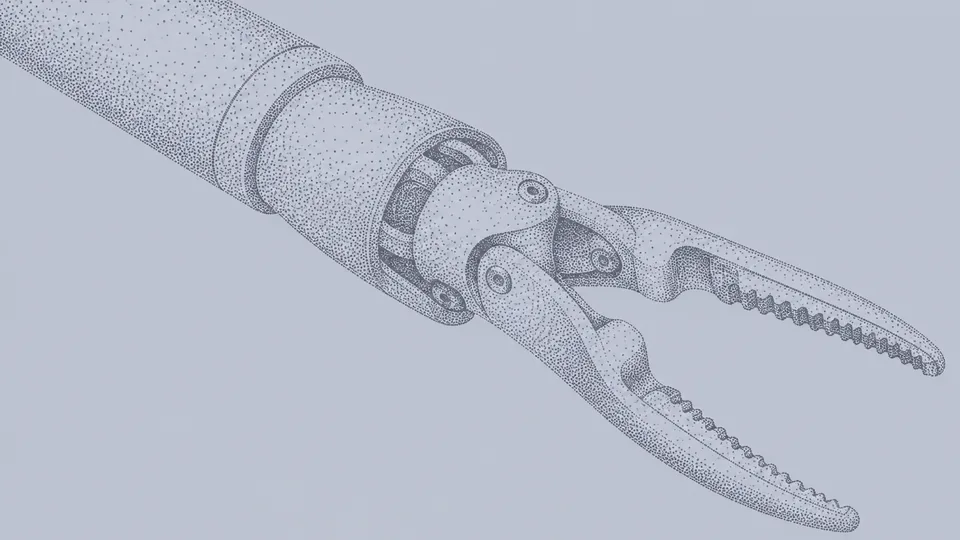 RM·CS·10
Instrument Segmentation of a Surgical Robot
Open record RM·CS·11
Depth Estimation of Endscopic View
Open record RM·CS·12
Audio Deepfake Detection
Open record RM·CS·13
A Generalization Method for Audio Deep Fake Detection
Open record RM·CS·14
3D Localization of Objects Using Point Cloud and Image (Automotive)
Open record RM·CS·15
AI-Powered Vertical Farming: Enhancing Crop Monitoring and Sustainability
Open record RM·CS·16
RediMinds POV: Geospatial AI for AI Data Center Site Selection
Open record RM·CS·17